 CLIENT LOGIN
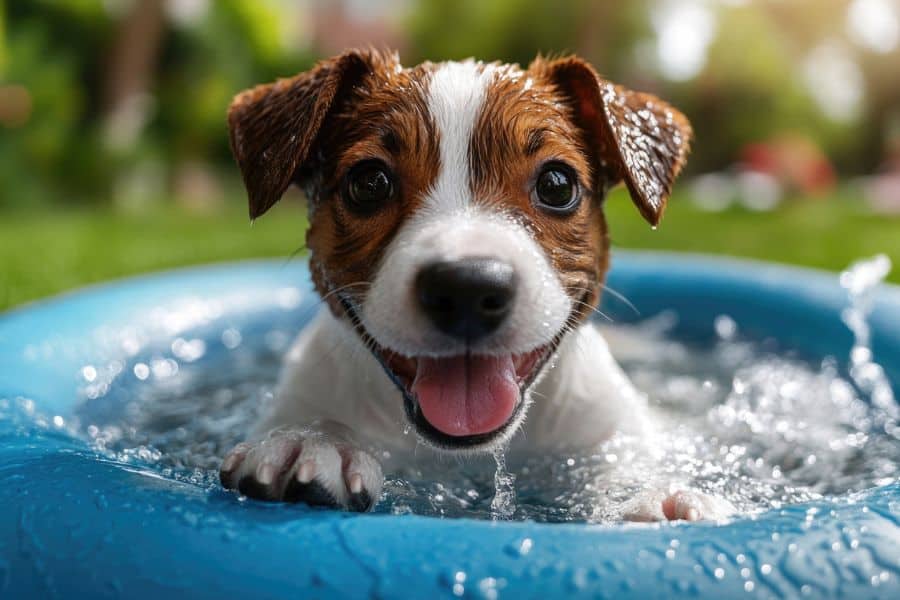
There are a few things you can do to help your dog beat the summer heat. You walk your dog early, keep their water bowl full of fresh water, and take the shadiest route in the neighborhood. Even after all of that, your dog still comes home exhausted, panting, and ready to stretch out on the cool tile as if they’ve just run a marathon. Meanwhile, your friend’s dog seems fine after a summer walk, happily doing twice the distance in the same heat.
You’re not imagining things, and you’re not making mistakes. Often, the difference comes down to your dog’s breed. Some breeds are naturally better at handling heat, while others struggle as soon as summer starts. Learning about breed and heat tolerance can really change how you care for your dog.
Their Coat Isn’t the Only Thing That Matters
The first thing most people think of is fur. A long coat equals hot; a short coat equals cool. Seems simple, but it doesn’t quite work like that. Coat type matters, but so do coat structure, skull shape, body size, leg length, and the climate in which the breed was originally developed.
A dog is not just wearing a jacket that they can’t take off. They’re carrying an entire physiological profile shaped by hundreds of years of selective breeding for specific environments and tasks.
A Siberian Husky’s double coat, for example, actually does two things. It insulates against cold in winter and, when properly maintained, reflects heat and protects against sunburn in summer. The problem isn’t the coat itself. It’s that the Husky’s entire biological system, metabolism, panting efficiency, and vascular cooling, was engineered for sub-zero conditions, not living in Delaware in August. The coat is almost beside the point.
Meanwhile, a Greyhound has almost no insulating coat at all. They have a lean body with a large surface area-to-mass ratio and long legs that keep them off the hot ground. They lose heat efficiently. They were bred in warm climates for explosive, short-burst activity, which makes summer easier for them.
The coat is the thing you can see. The rest determines how your dog experiences heat.
Breeds That Have a Harder Time in The Summer
These are the dogs whose owners need to be most proactive when temperatures climb.
French Bulldogs and English Bulldogs
These breeds are probably the most widely owned dogs in this category right now, and they’re everywhere in Mid-Atlantic suburbs for good reason. They’re compact, affectionate, and great apartment dogs.
Unfortunately, their flat faces (the technical term is brachycephalic) mean their airways are physically narrowed. Panting is how dogs cool down. When panting is already laboured at baseline for a non-brachycephalic dog, the cooling system of bulldogs is compromised from the start. In serious heat, a Frenchie or Bulldog can move from uncomfortable to dangerous faster than most owners expect.
Pugs
Pugs fall into the same category as Bulldogs. While they are charming, playful and affectionate, they are genuinely heat-sensitive in a way that goes beyond preference. On hot days, their activity needs to be minimal, and their environment needs to be cool.
Bernese Mountain Dogs and Saint Bernards
These gentle breeds are popular family dogs, and their gentle temperaments make them ideal for families with kids. These dogs were purpose-built for alpine conditions. Their thick, heavy double coats, combined with their large body mass, make heat dissipation genuinely difficult. They’re not being dramatic when they lie down after five minutes outside in July. They’re trying to beat the heat!
Chow Chows
Chow Chows have one of the densest coats of any breed, combined with a somewhat brachycephalic facial structure. These two compounding factors stack the odds against them, which makes summer hard work for them.
Boxers
Boxers are athletic and high-energy, and sometimes their heat sensitivity can catch their owners off guard. Their shortened muzzle puts them in the brachycephalic category. Since these breeds are very enthusiastic, they tend to push themselves past the point of discomfort. If you own a boxer, you will need to set limits on their play and exercise.
Shih Tzus and Cavalier King Charles Spaniels
Shih Tzus and Spaniels are popular, smaller breeds that both carry brachycephalic traits. Their size means they heat up quickly in the summer. Their temperament makes them reluctant to quit, so they won’t always tell you when they’ve had enough after playing with their favorite toy outdoors on a hot day.
Breeds That Handle the Heat Better
This doesn’t mean these dogs don’t need summer care at all. They just have a higher tolerance and a lower baseline for summer heat.
Vizslas
This particular breed was developed in Hungary for long days of work in warm, open terrain. Lean, short-coated, and built for endurance in heat, they’re one of the breeds well-suited to summer activity. They still need water and reasonable timing outdoors, but they’re working with their biology rather than against it.
Weimaraners
They share a similar profile to vizlas. Weimaraners are athletic, short-coated, and built for sustained outdoor work. Hot weather doesn’t affect them as badly as it does heavier or flat-faced breeds.
Dalmatians
Dalmatians were bred to run alongside carriages for miles in all kinds of weather. Their short, dense coat and lean build make them capable warm-weather dogs, and their energy levels mean they actually benefit from summer activity rather than needing to avoid it.
German Shorthaired Pointers
German Shorthaired Pointers are another working breed with a short, water-resistant coat and a lean, athletic build. They’re built for long days outdoors and handle warmth better than most. Common enough in active Delaware households that their owners are often pleasantly surprised by how well they adapt to summer routines.
Greyhounds and Whippets,
These guys are perhaps the most naturally heat-adapted of the popular breeds. Their body composition, with minimal fat, lean muscle, short coat, and long limbs, is almost purpose-designed for efficient heat loss. Whippets in particular are underrated as summer dogs.
Mixed Breeds: Reading the Signals
A huge number of dogs in any community are mixes, and understanding dog breeds and heat tolerance gets more nuanced when you’re working with a dog whose background isn’t fully known. If your rescue has a Bulldog-type face, treat them as heat-sensitive regardless of the rest of their mix. If they’ve got the lean build and short coat of a hound, they’ll likely do better.
You know your dog best, and their behavior is your most reliable indicator of how they’re feeling. A dog that is always looking for shade, pants heavily after minimal activity, or is reluctant to go back outside once they’ve come in from a walk is telling you something important about their personal heat tolerance. That’s worth listening to regardless of what their DNA says.
What This Actually Changes For Your Routine
Knowing your dog’s heat profile isn’t just interesting information; it changes the decisions you make around their care. A Vizsla owner and a Frenchie owner should not be on the same summer schedule. The Vizsla might really benefit from a longer morning run while it’s cool. The Frenchie might need their outdoor time capped at 10 minutes, even if it’s at 8am on a humid day, with the rest of their enrichment happening indoors.
It also changes how quickly you act when something seems off. A heat-tolerant breed that’s panting heavily and slowing down is a more urgent signal than the same behaviour in a breed that runs warm and pants readily. Context matters, and breed is a big part of that context.
Understanding dog breeds and heat tolerance can help you spot warning signs sooner and adjust your summer routine before the heat becomes a real problem.
When Your Dog Communicates, Listen to Them
The dogs that struggle most in summer aren’t fragile or poorly trained. They’re just working against a biological profile that wasn’t designed for heat. Once you understand that, the frustration of a dog that won’t push through a summer walk turns into something else: useful information about what they actually need.
Summer can be wonderful for dogs and owners alike. It just works better when you meet your dog where their breed actually is and not where you wish they were.
Here at Content Critter, we are experienced with many different dog breeds and their needs. Contact us today to book your dog walks and get your schedule ready for the summer season!

Dog Walkers & Pet Sitters in Newark, Hockessin, Greenville, Wilmington, Bear and New Castle, DE – Landenberg, Avondale and Kennett Square, PA and parts of Elkton, MD.
0 Comments